
Words That Outlived Their Stories: Phrases from Literature That Still Shape How We Speak
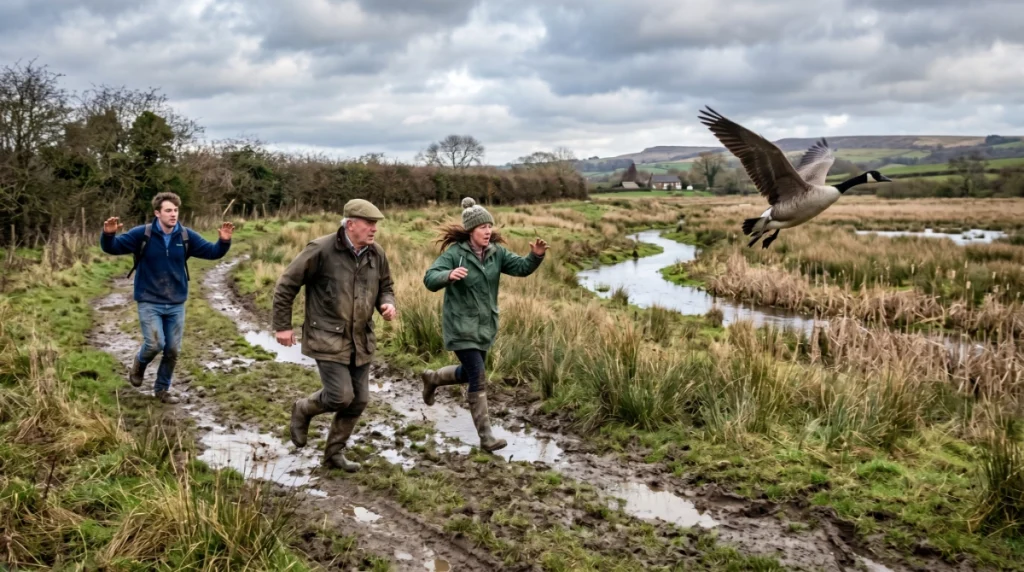
In short: Everyday expressions like “wild-goose chase,” “green-eyed monster,” and “tilting at windmills” all originated in specific literary works — mostly Shakespeare, Dickens, Cervantes, and Lewis Carroll — and have since drifted from their original context into common use. These phrases endure because they captured a human experience with such precision that people kept reaching for them long after the original story was forgotten.
Language is a kind of archaeology. Buried inside the phrases we use every day — in casual conversation, in offices, in text messages — are fragments of stories that most of us have long since forgotten. We reach for these expressions because they feel right, because they say precisely what we mean with an economy that our own words can’t quite match. What we rarely stop to notice is that someone invented them, in a specific moment, for a specific purpose, and that the stories behind them are often far more interesting than the phrases themselves.
Literature has given the English language an extraordinary number of these embedded gifts. From Shakespeare to Dickens, from Cervantes to Lewis Carroll, writers have coined words and phrases that slipped out of their original contexts and into the common tongue, where they’ve been living ever since — sometimes for centuries — entirely unaware of their own origins. Here are some of the best of them.
“Wild-Goose Chase” — Shakespeare, Romeo and Juliet (1597)
We use this phrase to describe any hopeless pursuit — a search that leads nowhere, a quest for something that keeps moving just out of reach. It feels like the kind of expression that must have come from actual experience of chasing actual geese, which are notoriously uncooperative.
In fact it comes from Shakespeare. In Romeo and Juliet, Mercutio uses it in a sparring match of wits with Romeo: the two are engaged in a kind of verbal chase, each trying to outrun the other’s cleverness. The “wild-goose chase” Mercutio refers to was actually a type of horse race in which following riders had to mirror the lead rider’s course exactly — like geese following a leader in formation. The connection to fruitless pursuit came later, as the phrase drifted away from its original meaning and settled into its current one. Shakespeare gave us the phrase; the centuries gave it its modern sense.
“A Heart of Gold” — Shakespeare, Henry V (1599)
We reach for this phrase when we want to describe someone of genuine goodness — someone whose kindness isn’t performance, whose generosity comes from the deepest part of who they are. It feels ancient, almost proverbial, as if it predates writing itself.
Shakespeare again. In Henry V, the king goes in disguise among his soldiers the night before the Battle of Agincourt, and one of them describes him as having a heart of gold. The phrase captured something so precisely — the idea of a core of rare, incorruptible value at the centre of a person — that it immediately escaped the play and entered the language. Few expressions have had a more successful afterlife.
“Green-Eyed Monster” — Shakespeare, Othello (1603)
When we describe jealousy as the green-eyed monster, we’re borrowing directly from Iago’s speech to Othello, warning him that jealousy is a monster that mocks the very thing it feeds on. The image — jealousy as a creature that torments the thing it consumes — is one of Shakespeare’s most vivid, and it was so precise a description of the experience of jealousy that it immediately took root in the language.
What’s particularly interesting is that the phrase has survived while the speech it comes from has been largely forgotten by most people who use it. The monster has outlived its origin story, though the origin story — Iago’s manipulation of Othello’s jealousy into murderous rage — gives the phrase a darkness that its casual modern use tends to obscure.
“Scrooge” and “Micawberish” — Dickens
Charles Dickens had an extraordinary gift for creating characters so vivid and so precisely observed that their names became common nouns. A “scrooge” — lowercase now, generic — is any mean-spirited miser, any person who hoards warmth and generosity as jealously as money. The word has almost entirely detached itself from the Christmas Carol plot that gave it birth; most people who use it have never read the story.
“Micawberish” describes a particular kind of incorrigible optimism — the cheerful, feckless confidence that “something will turn up,” regardless of all evidence to the contrary. Mr Micawber in David Copperfield is one of Dickens’s great comic creations, perpetually in debt and perpetually certain that fortune is just around the corner. His name has become an adjective that carries all of that — the warmth, the comedy, and the slight edge of exasperation — in a single word.
Dickens also gave us “Pickwickian” (meaning well-intentioned but slightly absurd), “Gradgrind” (as a noun for any ruthless utilitarian who reduces human beings to facts and figures), and “Bumbledom” (petty bureaucratic self-importance, from the beadle Bumble in Oliver Twist). These are characters who became concepts, stories that became vocabulary.
“Tilting at Windmills” — Cervantes, Don Quixote (1605)
When we describe someone as tilting at windmills, we mean they are attacking imaginary enemies, fighting battles that exist only in their own minds, expending furious energy on problems that aren’t really there. It’s a phrase for a particular kind of magnificent, doomed idealism.
It comes, of course, from the scene in Don Quixote where the knight, his mind disordered by too much reading of chivalric romances, mistakes a row of windmills for giants and charges at them on horseback. His squire Sancho Panza protests; Don Quixote ignores him; the windmill’s sails knock him from his horse. The scene is simultaneously funny and rather heartbreaking — a portrait of a man whose rich inner world has lost its connection to the one everyone else inhabits.
The phrase has travelled a long way from that dusty Spanish plain. It now describes anyone who campaigns against things that most people consider settled or non-existent, from conspiracy theorists to visionary reformers, depending on your perspective. Don Quixote himself would probably approve of the ambiguity.
“Curiouser and Curiouser” and “Through the Looking Glass” — Lewis Carroll (1865, 1871)
Lewis Carroll’s Alice books gave the English language a remarkable number of phrases and concepts that have become essential to how we describe certain kinds of experience. “Through the looking glass” now describes any journey into an inverted or distorted version of reality — and has been borrowed by everyone from spy novelists to neuroscientists describing mirror phenomena. “Down the rabbit hole” describes any process of deep, obsessive investigation that leads you further and further from where you started. Both phrases have entirely escaped their original context and now live independent lives across dozens of fields.
“Curiouser and curiouser” — Alice’s grammatically imperfect exclamation as Wonderland becomes progressively stranger — has become a standard expression for situations of escalating peculiarity. Carroll probably would have appreciated the irony of a grammatical error becoming a standard phrase.
“The World Is a Stage” — Shakespeare, As You Like It (1599)
The line describing all the world as a stage, and all its people as merely players, is one of the most quoted in English literature — and one that has drifted furthest from its original context. We tend to use it as a grand philosophical statement about the performative nature of human existence, a sophisticated observation about how we all play roles.
In the play, it’s spoken by Jaques — the resident melancholic, whose philosophical pronouncements are consistently undercut by the playwright. The speech that follows, describing the seven ages of man, is bleakly reductive: human life as a series of increasingly undignified performances, ending in decline and oblivion. It’s not an uplifting observation; it’s a profoundly melancholy one, delivered by a character whom Shakespeare treats with a certain fond scepticism.
The phrase has survived while the speech’s melancholy has been largely forgotten, which is perhaps a kind of optimism on the part of the language.
Why This Matters for Storytellers
For anyone who loves stories — and especially for anyone writing their own — this history of embedded phrases carries an important and encouraging message: the best writing doesn’t just communicate; it enriches the language itself. The writers who gave us these phrases weren’t trying to coin lasting expressions. They were trying to say something precisely, something that captured an experience or an idea as exactly as possible. The lasting quality came as a consequence of the precision.
When Shakespeare described jealousy as a green-eyed monster, he wasn’t writing for posterity. He was writing for an audience who needed to understand, in that moment, what Iago was doing to Othello. The phrase lasted because it was true — because it described something real about human experience with sufficient accuracy that people kept reaching for it, generation after generation, whenever they needed to describe that particular thing.
This is the deeper reason why old stories keep giving us new language: they were doing the hard work of looking at human experience honestly and finding words for what they found. That work never goes out of date. The experience of jealousy hasn’t changed since Shakespeare’s time. The experience of hopeless pursuit hasn’t changed. The experience of fighting battles that exist only in your own mind hasn’t changed. The words that describe those experiences precisely enough will always be available for borrowing.
At a tabletop theatre, you are working with some of the very stories that gave us these phrases. The green-eyed monster stalks the stage of Othello. Long John Silver’s moral complexity is as current as any character in contemporary fiction. Benedick and Beatrice’s war of wit captures something about love and self-protection that hasn’t changed in four hundred years. When you bring these stories to a new stage, you’re not just telling old tales — you’re keeping alive the language itself.
Frequently Asked Questions
Where does the phrase “green-eyed monster” come from?
It comes from Iago’s speech to Othello in Shakespeare’s play, warning him to beware jealousy, described as a monster that mocks the very thing it feeds on. The phrase has survived widely even as the speech it comes from has been largely forgotten.
What does “tilting at windmills” mean and where does it originate?
It means attacking imaginary enemies or fighting battles that don’t really exist. It comes from Cervantes’s Don Quixote, in which the knight mistakes a row of windmills for giants and charges at them on horseback.
How did “scrooge” become a common word for a miser?
It comes from Ebenezer Scrooge, the mean-spirited central character of Charles Dickens’s A Christmas Carol. The word has almost entirely detached from the original story, and most people who use it have never read the book.
What does “wild-goose chase” originally refer to?
It originally described a type of horse race in which following riders had to mirror the lead rider’s course exactly, like geese in formation. Shakespeare used the phrase in Romeo and Juliet, and its meaning later drifted toward describing any hopeless, fruitless pursuit.
Why do phrases from old literature still survive in everyday language?
They endure because they captured a human experience, such as jealousy or hopeless pursuit, with such precision that people kept reaching for them long after the original story was forgotten, since the underlying experience they describe hasn’t changed.
Join Us
At Create Theatre, we believe that the great stories of the past are more alive than they’re sometimes given credit for. Our handcrafted tabletop theatres bring those stories within reach — and give you the stage to discover what they still have to say. Sign up below to join our community and be the first to hear when we launch.
Join the Create Theatre community — sign up for updates today.
Create Theatre in Your Life
www.CreateTheatre.com